Funtana Raminosa Mine: An Emotional Journey into the Ancient Mining Heart of Sardinia
Hidden among the rugged mountains of central Sardinia lies a place where nature, history, and human resilience intertwine in a powerful and evocative landscape: the Miniera di Funtana Raminosa.
Located in the mountainous territory of Gadoni, within the historic region of Barbagia, this ancient copper mine represents one of the most fascinating testimonies of Sardinia’s long mining tradition.
To encounter this place is to step into a narrative carved directly into the rock — a story of earth, labor, and centuries of human determination. The landscape itself feels alive with memory, as if every stone and every tunnel still echoes with the voices of the miners who once worked beneath the mountain.
A Landscape Where Nature and Mining History Merge
The area surrounding the Miniera di Funtana Raminosa is characterized by dramatic hills, dense Mediterranean vegetation, and mineral-rich soils that reveal their secrets through striking colors.
The name “Funtana Raminosa” literally translates to “Copper Spring”, an evocative expression that perfectly reflects the geological richness of this territory. For centuries, the earth here has yielded copper, one of the most important metals in the development of ancient and modern civilizations.
Walking through the area, the terrain itself seems to tell the story of the mine. The rocks display shades of red and ochre, while oxidized copper creates green and turquoise tones that contrast with the surrounding vegetation. These natural pigments are a silent reminder of the mineral veins hidden beneath the surface.
The result is a landscape that feels both raw and poetic: a place where geology and history blend together, creating a unique environment shaped by both nature and human effort.
Ancient Origins: From Nuragic Civilization to the Roman Empire
The origins of mining at the Miniera di Funtana Raminosa reach far back into antiquity. Archaeological studies suggest that the copper deposits in this region were already being exploited during the Nuragic period, when prehistoric communities of Sardinia began extracting and working metal to produce tools, weapons, and ritual objects.
Copper was an essential material during the Bronze Age, and Sardinia became an important center for metal production and trade across the Mediterranean. The mineral wealth of areas like Gadoni played a key role in this early technological development.
Later, during Roman rule, mining activity intensified significantly. The Romans recognized the economic value of the copper deposits and organized more structured extraction operations. The metal extracted from the mountains of Barbagia was used to produce tools, coins, and military equipment, becoming part of the vast trade networks of the Roman Empire.
Today, traces of these ancient activities can still be perceived in the terrain and in the historical layers of the mining structures scattered across the site.
The Industrial Era and the Life of the Miners
While its origins are ancient, the Miniera di Funtana Raminosa experienced its most intense period of development between the 19th and early 20th centuries.
During this time, mining companies expanded the underground tunnels, built industrial facilities, and introduced new extraction technologies. The remote mountain area gradually transformed into a bustling industrial site surrounded by workshops, transport systems, and processing areas.
For the inhabitants of Gadoni and nearby villages, the mine was far more than a workplace. It shaped daily life, defined social structures, and created a strong sense of community.
Each day began before sunrise, when miners prepared to descend into the dark galleries carved deep into the mountain. Equipped with basic tools and immense courage, they spent long hours underground extracting the precious copper ore that sustained the local economy.
The work was physically demanding and often dangerous, but it also fostered a deep bond between the workers and the land they depended on. Generations of families were connected to the mine, creating a collective memory that still resonates in the stories passed down through the community.
A Silent Landscape Filled with Memory
Today the mining operations have long ceased, and the area surrounding the Miniera di Funtana Raminosa is enveloped in a profound and almost contemplative silence.
Yet this silence is not empty. It is a silence filled with echoes of the past.
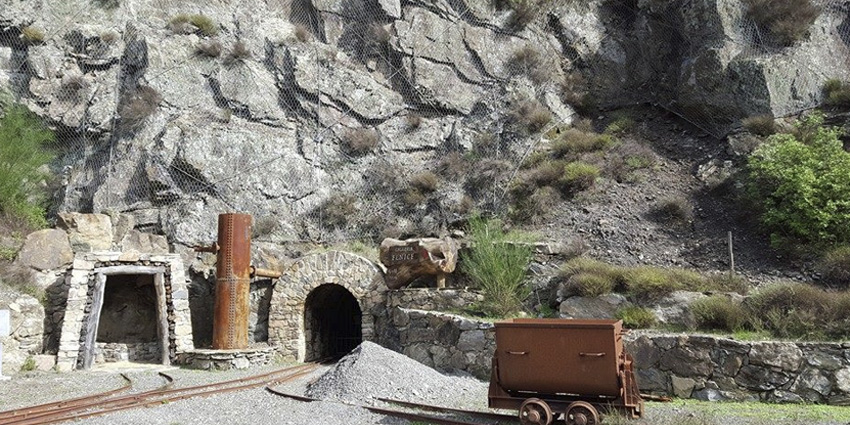
Abandoned industrial buildings, rusted machinery, and the dark entrances of old tunnels remain scattered across the mountainside. Nature has slowly reclaimed many of these spaces: grasses grow through cracked stone floors, shrubs surround old structures, and trees cast shadows over the remnants of industrial activity.
This gradual return of nature creates a powerful visual contrast. The rugged beauty of the Sardinian landscape merges with the remnants of human industry, forming a striking example of industrial archaeology embedded within a natural environment.
Walking through the site feels like exploring an open-air historical archive, where each structure reveals another fragment of the story.
Cultural Heritage and Identity
Today the Miniera di Funtana Raminosa stands as one of the most significant examples of mining heritage in Sardinia.
Beyond its historical importance, the site represents a deeper connection between people and the land. For centuries, the mountains of Barbagia were not only part of the landscape but also a source of livelihood, identity, and cultural memory.
The mine embodies the resilience of the communities that lived and worked in these remote territories. Their relationship with the land was defined by respect, endurance, and an intimate understanding of the natural resources hidden beneath the surface.
Today, the story of the mine continues to live on through the preserved structures, the geological formations, and the narratives shared by the people of Gadoni.
An Emotional Encounter with Sardinia’s Hidden History
Experiencing the landscape of the Miniera di Funtana Raminosa means discovering a lesser-known side of Sardinia — one that goes beyond its famous coastlines and reveals the deep historical layers of the island.
Here, the mountains tell stories of ancient civilizations, industrial ambition, and human perseverance. The colors of the rocks, the quiet of the abandoned structures, and the vast Sardinian sky above create an atmosphere that feels both powerful and reflective.
It is a place where time seems to slow down, inviting visitors to contemplate the enduring relationship between nature, history, and the people who shaped this extraordinary landscape.