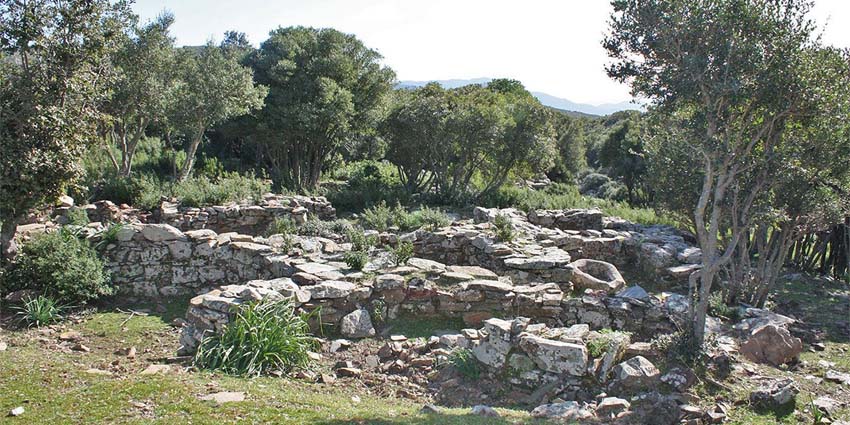
The Roman Village of Cea: an Emotional Journey Through the Silent Remains of an Ancient Coastal Settlement
Along the eastern coast of Sardinia, where the Mediterranean reveals some of its most transparent waters and untamed landscapes,
lies a place where time feels suspended. Not far from the golden shoreline of Spiaggia di Cea, the quiet remains of the ancient Roman village of Cea emerge from the earth almost shyly, blending into the surrounding Mediterranean landscape.
Here, history does not manifest itself through monumental ruins or imposing architecture. Instead, it whispers through fragments of stone, subtle traces of walls, scattered ceramics, and the natural contours of the terrain. These modest remains form part of a forgotten narrative — a small coastal settlement that once existed along the maritime routes of the ancient Mediterranean.
Walking through this landscape is less like visiting an archaeological site and more like stepping into a memory preserved by nature. The scent of wild herbs drifts through the air, the wind moves softly across the shrubs, and the distant rhythm of the sea provides a constant reminder that this place has always lived in close connection with the water.
A Strategic Coastal Settlement in Ancient Sardinia
During the era of the Roman Empire, Sardinia played an important role within the network of Mediterranean trade and navigation. While large urban centers existed across the island, much of the coastline was dotted with smaller settlements that supported local agriculture, fishing, and maritime exchange.
The Roman village of Cea likely belonged to this network of modest yet vital coastal communities. Positioned along the eastern shoreline, the area provided natural access to the sea while remaining close to fertile inland territories. This balance between land and water would have allowed its inhabitants to sustain a lifestyle based on farming, fishing, and small-scale commerce.
Archaeological traces suggest that the village was composed of simple residential structures, probably built using local stone and other materials readily available in the surrounding environment. The layout was likely compact and practical, designed to withstand coastal winds and seasonal changes.
Although the settlement may not have been large, its position along maritime routes would have connected it indirectly to the broader economic world of the Roman Mediterranean. Merchant ships, fishing boats, and coastal traders would have passed along this stretch of coastline, linking even small communities like Cea to distant ports.
Traces of Everyday Life Beneath the Landscape
What remains today are fragments — the quiet evidence of everyday life from centuries ago. Low stone walls outline what may once have been homes or storage areas. Pieces of pottery occasionally surface from the ground, hinting at domestic activities such as cooking, storage, and trade.
These remnants tell the story of ordinary people rather than emperors or soldiers. Families who lived by the rhythm of the sea, farmers who cultivated nearby land, fishermen who ventured into the waters of Sardinia’s eastern coast. Their lives were simple, yet deeply connected to the environment around them.
Standing among these ruins, it is easy to imagine the subtle sounds that once filled this space: voices carrying across the settlement, the crackling of fires used for cooking, the clinking of ceramic vessels, and the constant background murmur of the sea.
Time has erased most physical traces of those lives, but the landscape still holds their presence.
The Emotional Experience of Walking Through the Ruins
One of the most powerful aspects of visiting the remains of the Roman village of Cea is the emotional atmosphere created by the environment itself. The site is not dominated by fences, heavy tourist infrastructure, or reconstructed monuments. Instead, it remains integrated into the natural landscape.
The Mediterranean vegetation grows freely around the stones. Sunlight filters through shrubs and wild grasses. The wind carries the scent of salt and aromatic plants typical of Sardinia’s coastal regions.
This natural setting encourages a slower pace of exploration. Each step becomes a quiet moment of reflection, where the present merges gently with the past. Rather than observing history from a distance, visitors find themselves immersed in it.
The experience is less about studying ruins and more about sensing the continuity of time.
Ogliastra: A Land Where Nature and History Intertwine
The broader region of Ogliastra is widely known for its dramatic landscapes — towering limestone cliffs, secluded coves, and long stretches of unspoiled coastline. Yet beneath this natural beauty lies a rich historical tapestry that spans thousands of years.
From prehistoric Nuragic settlements to Roman coastal communities and later medieval villages, the territory has been inhabited continuously for millennia. Many of these historical traces remain subtle, hidden within forests, hillsides, and coastal plains.
The Roman village of Cea represents one of these quieter pieces of heritage. It may not attract the same attention as large archaeological complexes, but its significance lies in the authenticity of the experience it offers.
Here, history has not been reshaped or heavily reconstructed. It remains fragile, understated, and deeply connected to the surrounding landscape.
A Dialogue Between Past and Landscape
What makes the remains of the Roman village of Cea particularly captivating is the seamless relationship between archaeology and nature. The ruins do not dominate the environment; they coexist with it.
Over centuries, wind, rain, vegetation, and sunlight have gradually softened the edges of the ancient structures. Stones that once formed walls now blend with the earth, creating a subtle dialogue between human history and natural processes.
This harmony allows visitors to perceive the site in a uniquely emotional way. Instead of monumental grandeur, there is a sense of quiet continuity — the awareness that generations of people have lived, worked, and moved through this landscape long before the modern world arrived.
Looking toward the sea from the remains of the village, it becomes clear that the horizon seen today is likely the same one that ancient inhabitants once watched. The same winds blow across the coast, and the same Mediterranean light illuminates the land.
The Silent Legacy of the Roman Village of Cea
Today, the ruins of the Roman village of Cea remain a subtle yet meaningful testimony to Sardinia’s layered history. They remind us that the ancient world was not made only of great cities and imperial monuments, but also of small communities that quietly sustained daily life across the Mediterranean.
Within this tranquil corner of Sardinia’s eastern coast, the past is not displayed as spectacle. It is felt in the landscape, carried in the wind, and preserved in the scattered stones that still rest beneath the Mediterranean sun.
The experience of this place is not only archaeological — it is deeply emotional. A moment where history, nature, and memory converge, allowing the visitor to sense the presence of an ancient world that still lingers gently within the land.