Agàro: A Suspended Memory of Stone and Silence in the Italian Alps
Agàro is a name that seems to rise from the mountain air itself. A small hamlet of Premia, in the upper Antigorio Valley,
Agàro lies quietly within the Lepontine Alps, where time appears to have slowed to a near standstill. Once an independent municipality, Agàro lost its administrative autonomy in 1928, when it was officially suppressed and incorporated into Premia. Yet its identity was never erased. Instead, it remained embedded in the landscape, in the stone houses, in the alpine paths, and in the deep silence that still defines the place today.
To speak of Agàro is not merely to describe a geographic location in northern Piedmont. It is to enter a layered space where history, memory, and nature overlap. Agàro exists in a delicate balance between presence and absence, between what once was and what quietly endures. It is a place that does not announce itself, but reveals its essence slowly, to those willing to listen.
Before 1928, Agàro functioned as a fully autonomous comune, with its own civic life shaped by the rhythms of mountain existence. The suppression of the municipality was part of a broader administrative reorganization, but on a human level it marked a subtle fracture. Governance changed, borders shifted, yet the daily life of the hamlet continued much as before. The sense of belonging, rooted in shared labor, seasonal cycles, and collective memory, did not disappear with a decree.
Even today, Agàro retains the quiet dignity of a former alpine community. The architecture tells this story clearly. Stone houses, built to withstand harsh winters and long isolation, stand close together, forming a compact and resilient settlement. Their walls bear the marks of time, weather, and human presence, creating a dialogue between permanence and vulnerability. Nothing here is ornamental; everything has purpose, shaped by necessity and adaptation.
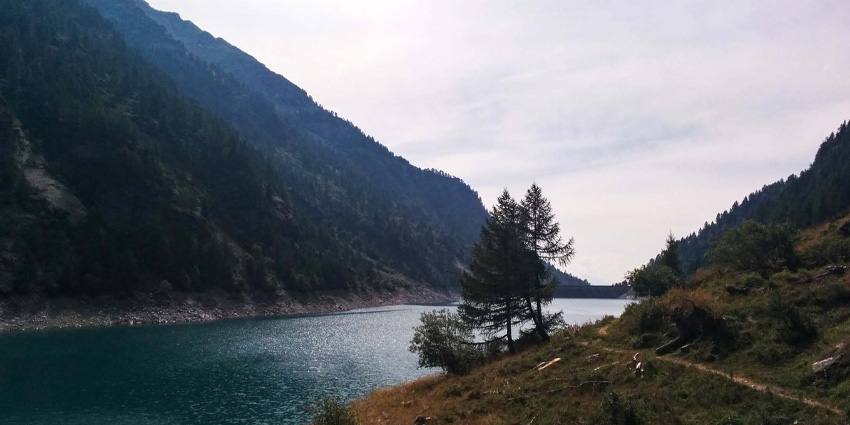
The surrounding landscape plays a central role in the emotional experience of Agàro. The Lepontine Alps rise protectively around the hamlet, imposing yet intimate. Forests, pastures, and rocky slopes frame the village, reinforcing the sense of enclosure and continuity. In winter, snow absorbs sound, intensifying the silence and giving Agàro an almost unreal stillness. In summer, light and color return, and the land breathes again, revealing traces of agricultural life and ancient paths leading upward toward the high pastures.
Walking through Agàro feels less like visiting a village and more like entering a memory. Narrow lanes follow irregular lines, shaped not by modern planning but by centuries of footsteps. Each corner suggests a story that has never been written down, preserved instead through repetition, habit, and oral tradition. The absence of noise allows the smallest details to emerge: the texture of stone, the creak of wood, the way shadows shift along old façades.
The emotional character of Agàro is subtle and restrained. It does not offer spectacle or dramatic views designed to impress. Its power lies in understatement. The village asks for slowness, for attention, for a willingness to remain present. In this way, Agàro becomes a place of introspection, where the boundary between external landscape and inner reflection grows thin.
Historically, Agàro represents one of many small alpine communities that experienced depopulation over the course of the twentieth century. Economic change, industrialization, and migration altered the social fabric of mountain life. Yet depopulation did not mean disappearance. Many of Agàro’s buildings remain intact, suspended between past use and future possibility. They are not ruins, but witnesses—structures that hold memory rather than decay.
The year 1928 stands as a symbolic turning point in Agàro’s history. The loss of municipal status shifted the hamlet from a center of local administration to a peripheral presence within a larger entity. Still, this transition also preserved Agàro in a kind of historical pause. Freed from expansion and modernization, it retained its original form, becoming a repository of alpine heritage and rural identity.
Agàro today exists primarily through atmosphere. It is a place defined as much by what is missing as by what remains. The absence of crowds, traffic, and constant activity creates space for perception. Time feels different here—thicker, slower, less fragmented. The past is not staged or reconstructed; it simply lingers, woven into the everyday fabric of the village.
From an emotional perspective, Agàro evokes a quiet resilience. It speaks of adaptation rather than conquest, of coexistence with nature rather than dominance. The relationship between humans and the alpine environment is evident everywhere, from the orientation of buildings to the careful use of terrain. This balance gives Agàro its particular sense of harmony, rooted in respect for limits.
Agàro is not a destination that demands attention. It does not seek to be rediscovered or transformed. Instead, it remains, patiently, as it has for centuries. A former municipality, now a fraction of Premia, yet still whole in its identity. In Agàro, history has not ended; it has simply chosen to speak softly, through stone, silence, and the enduring presence of the mountains.