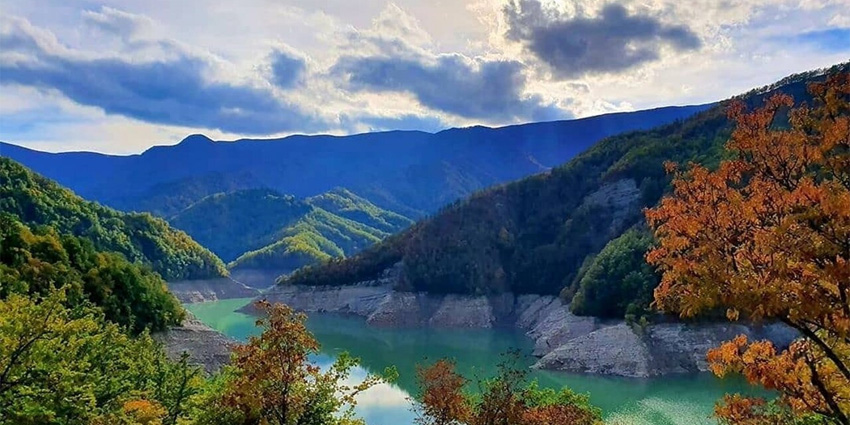
Casentinesi Forest National Park: an Emotional Journey into the Green Heart of the Apennines
Entering the Casentinesi Forest National Park, Monte Falterona and Campigna feels like crossing an invisible threshold.
Beyond it, time slows down, sounds soften, and nature begins to speak in its most ancient and sincere language. Straddling the regions of Tuscany and Emilia-Romagna, this vast protected area is one of the most intact forest ecosystems in Europe, a place where the landscape is not merely seen but deeply felt.
A Natural Sanctuary of Silence and Light
The Casentinesi Forests welcome visitors with a profound silence, broken only by the rustling of leaves and the distant calls of birds. Towering beech trees, ancient firs, and monumental oaks rise like columns of a natural cathedral, where sunlight filters gently through the canopy, creating ever-changing patterns of shadow and light.
Each step along the forest trails carries a sense of reverence, as if the woods themselves were asking for attentiveness and respect. In autumn, the park becomes a living canvas painted with warm hues of gold, red, and copper. In spring, the forest floor awakens with delicate blossoms and the earthy scent of damp soil, while summer offers cool shade and the quiet murmur of streams flowing through hidden valleys.
The Ancient Breath of Primeval Forests
Among the most precious treasures of the Casentinesi Forest National Park are its ancient and primeval forests, areas that have remained largely untouched by human intervention. Here, nature follows its original rhythm: trees fall and decay, nourishing the soil from which new life emerges. Dead wood becomes a vital resource, fostering biodiversity and sustaining countless plant and animal species.
Walking through these forests evokes a deep sense of connection. The slow pace of natural cycles becomes palpable, offering a stark contrast to the urgency of modern life. It is an experience that resonates on an emotional level, restoring a sense of balance and reminding visitors of humanity’s place within the natural world.
Sacred Places Hidden Among the Trees
The park is also home to a remarkable spiritual heritage. The Camaldoli Hermitage and the Sanctuary of La Verna rise quietly among the trees, blending seamlessly into the surrounding landscape. These sacred sites have been places of meditation, solitude, and reflection for centuries.
Here, spirituality is inseparable from nature. The sound of bells drifts through the forest air, merging with the whisper of the wind in the branches. These places embody a profound dialogue between human contemplation and the natural environment, enriching the park with layers of history, silence, and meaning.
Wildlife and Untouched Biodiversity
The Casentinesi Forest National Park provides refuge to a rich and discreet wildlife population. Apennine wolves roam these woods with silent grace, alongside deer, roe deer, and fallow deer. Encounters are often fleeting—an unexpected movement, a distant silhouette, a sound carried by the wind at dawn or dusk.
Biodiversity reveals itself not only through large mammals but also in the smallest details: mosses clinging to rocks, fungi emerging after rainfall, insects thriving in decaying wood, and crystal-clear streams carving their way through the valleys. Every element contributes to a delicate and powerful ecological balance.
A Landscape Shaped by Water and Mountains
The park’s geography is defined by rolling ridges, deep valleys, and vital water sources. Monte Falterona, the birthplace of the Arno River, represents a symbolic and physical heart of the area. Springs, waterfalls, and mountain streams trace silver lines across the landscape, sustaining life and shaping the terrain over millennia.
These waters add movement and sound to the forest’s stillness, enhancing the sense of immersion and continuity between land, water, and sky.
A Regenerative Experience for Body and Mind
Visiting the Casentinesi Forest National Park is not simply a journey through nature; it is an inward experience. The contact with such a pristine environment fosters a deep sense of renewal—both physical and emotional. Breathing becomes slower, thoughts quiet down, and perception sharpens.
The park does not demand attention; it gently offers presence, beauty, memory, and authenticity. It is a place that teaches without speaking, that welcomes without asking, and that leaves a lasting imprint long after the forest paths are left behind.
In the Casentinesi Forests, nature is not a backdrop but a living presence—one that restores, protects, and quietly endures.