Castello Reale di Moncalieri: An Emotional Journey Through Savoy History and Timeless Beauty
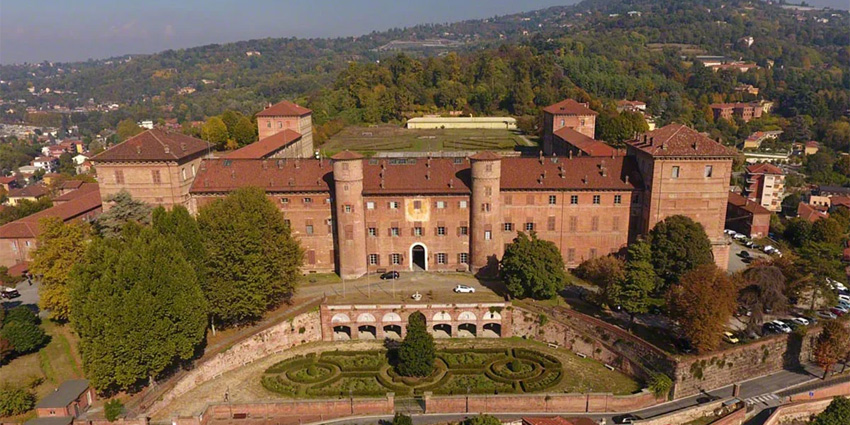
Perched gracefully on the hill overlooking the town of Moncalieri, the Castello Reale di Moncalieri rises as a silent guardian of memory and identity.
Its imposing yet harmonious silhouette dominates the landscape, visible from afar, as if reminding the surrounding territory of its centuries-old presence. More than a royal residence, it is a living narrative carved in brick and stone — a place where architecture, power, and intimacy have coexisted for generations.
Recognized by the UNESCO as part of the prestigious Savoy Residences World Heritage Site, the castle embodies the cultural and historical depth of the Casa Savoia. Yet beyond its institutional value, what truly defines the Castello Reale di Moncalieri is the emotional resonance it awakens in those who walk through its halls.
Medieval Origins and Baroque Transformation
The origins of the castle date back to the Middle Ages, when it was conceived as a strategic defensive stronghold controlling the surrounding lands and the route along the Po River. In its earliest form, the structure was austere and functional — a fortress designed for vigilance and protection.
Over time, however, its role evolved. As the House of Savoy consolidated power, the castle was transformed from a military bastion into a refined royal residence. This architectural metamorphosis found its most expressive form during the Baroque period, when court architects reimagined its spaces with elegance and grandeur. Among them, Carlo di Castellamonte played a crucial role in shaping the structure’s harmonious façades and balanced proportions.
The castle gradually adopted the aesthetic language of prestige: grand staircases, decorated ceilings, refined courtyards, and ceremonial halls designed to impress visiting dignitaries. Yet even in its most majestic expressions, the building never lost a certain intimacy — a quality that still lingers within its walls.
Royal Apartments: Between Ceremony and Intimacy
Stepping inside the royal apartments feels like entering a suspended dimension where time unfolds slowly. The polished wooden floors creak softly, echoing footsteps that once belonged to sovereigns and courtiers. Light filters through tall windows, illuminating period furnishings and decorative details that carry the weight of personal histories.
The castle was particularly cherished by Maria Clotilde di Savoia and by Vittorio Emanuele II, the first King of unified Italy. For them, Moncalieri was not merely a political residence but also a place of retreat — a setting for reflection, family life, and moments away from the pressures of statecraft.
Within these rooms, the public and private spheres gently intertwine. One can almost imagine the murmur of diplomatic conversations held in reception halls, followed by quieter evenings spent in more secluded chambers. The atmosphere retains something profoundly human: a reminder that behind the pageantry of monarchy were individuals shaped by responsibility, emotion, and circumstance.
Architecture in Dialogue with the Landscape
One of the most striking aspects of the Castello Reale di Moncalieri is its relationship with the surrounding environment. From its terraces and upper windows, the view extends across the Po River, the rolling hills of Piedmont, and — on clear days — the distant Alpine arc.
This elevated position is both symbolic and practical. It once represented authority and territorial oversight; today, it offers a contemplative vantage point. The castle does not dominate the landscape aggressively; instead, it engages in a silent dialogue with it. The warm tones of the brick façades echo the colors of the earth, while the symmetry of its design mirrors the calm rhythm of the hills below.
As light shifts throughout the day, the building transforms. At dawn, it appears almost ethereal; at sunset, its surfaces glow with golden hues. In every season, it reveals a different emotional shade — from the vibrant greenery of spring to the introspective stillness of winter.
A Jewel Among the Savoy Residences
As part of the network of Savoy royal residences scattered across Piedmont, the Castello di Moncalieri stands out for its authenticity and understated elegance. While other Savoy residences are often associated with overwhelming opulence, Moncalieri conveys a more measured, reflective grandeur.
It embodies continuity. Over centuries, the castle has adapted to political changes, national transformations, and shifting cultural contexts. Yet its essence has remained intact. Walking through its courtyards and corridors means traversing layers of Italian history — from feudal times to the Risorgimento and beyond.
The building’s endurance speaks to the resilience of heritage. It reminds visitors that architecture is not static; it absorbs stories, preserves identities, and becomes a vessel of collective memory.
The Emotional Depth of a Visit
Visiting the Castello Reale di Moncalieri is not merely an architectural exploration; it is an inward experience. There is a particular silence within its walls — not an absence of sound, but a presence of memory. Every decorative motif, every window frame, every vaulted ceiling seems to whisper fragments of the past.
The castle invites slow observation. It encourages reflection rather than spectacle. In a world that often moves quickly, Moncalieri offers stillness — a rare opportunity to feel history not as a distant narrative, but as something tangible and immediate.
As one exits the castle and looks back at its commanding profile against the sky, a subtle awareness lingers. The experience remains, not only as visual admiration but as emotional imprint. The Castello Reale di Moncalieri endures as a symbol of Savoy heritage, Piedmontese identity, and timeless elegance — a place where stone and memory converge, and where history continues to breathe quietly within ancient walls.