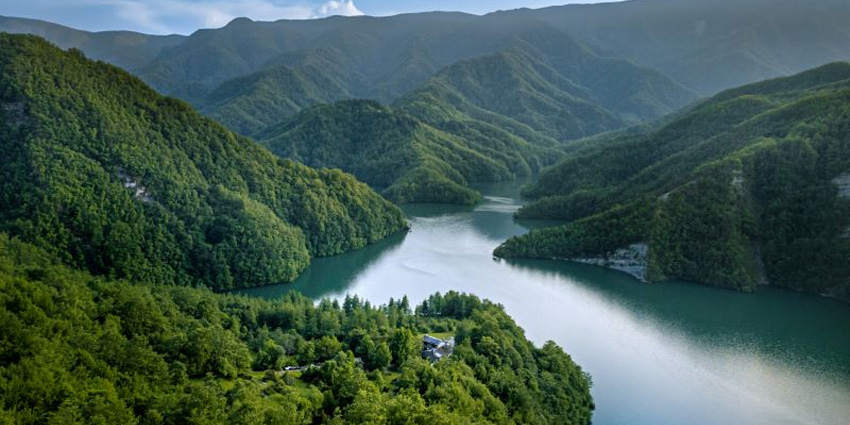
Exploring Casentino Forests National Park: A Weekend Among Ancient Forests and Italian Villages
There are places in Italy that seem to belong to another time.
Places where the pace of life slows down, the roads become quieter, and the landscape feels almost untouched.
The Casentino Forests National Park, officially known as Parco Nazionale delle Foreste Casentinesi, Monte Falterona e Campigna, is one of those places.
I discovered it during a weekend escape, expecting beautiful scenery and a few good walks. What I found was something much more immersive: ancient forests, mountain villages, stone paths, quiet monasteries and landscapes that seemed to change with every turn.
If you are looking for a different side of Italy—far from the busiest cities and crowded tourist routes—this corner of Tuscany and Emilia-Romagna is worth putting on your map.
A Weekend in the Casentino Forests National Park
The first thing that struck me was the silence.
After leaving the busier roads behind, the landscape gradually became greener and more mountainous. The Casentino Forests National Park stretches across the Apennines between Tuscany and Emilia-Romagna, protecting an extraordinary natural environment dominated by forests, mountains and valleys.
Walking beneath the trees, it was easy to forget how close I still was to some of Italy’s most famous destinations.
The forest has a character of its own. Beech trees, firs and chestnuts create deep shades of green, while narrow paths disappear into the woodland and reappear somewhere completely different.
It is the kind of landscape that encourages you to stop looking at your watch.
Walking Through Ancient Forests
One of the highlights of the weekend was simply walking.
You don’t necessarily need to be an experienced hiker to appreciate the park. There are trails and routes for different levels of ability, allowing visitors to experience the landscape at their own pace.
Some paths lead through dense woodland, while others open onto mountain viewpoints and quiet valleys.
The Foreste Casentinesi are particularly fascinating because of their sense of age. These are not just attractive woods; they are forests with a deep historical and cultural identity.
The atmosphere changes depending on the weather and season. In autumn, the forest becomes a spectacular combination of golden, orange and red foliage. In spring, fresh green leaves transform the landscape, while summer offers cooler temperatures beneath the trees.
Even on a short walk, there is always something to notice: the sound of water, birds moving through the canopy, moss-covered rocks or shafts of sunlight filtering between the trees.
Villages Where Time Moves Slowly
The weekend was not only about nature.
One of the pleasures of exploring the Casentino area is discovering the small villages scattered between the mountains. They offer a completely different experience from Italy’s famous art cities.
Stone houses, narrow streets, small squares and traditional restaurants create an atmosphere that feels intimate and authentic.
Rather than rushing from one attraction to another, I found myself enjoying the simple rhythm of these places: stopping for coffee, walking through quiet streets, discovering a local church or sitting outside for a meal while watching the day unfold.
This is perhaps one of the greatest attractions of the region.
You don’t come here simply to “see” things.
You come here to experience them.
The Spiritual Side of the Casentino Forests
The landscape also has a strong spiritual dimension.
Among the most remarkable places in the area is the Hermitage of Camaldoli, connected with the Camaldolese monastic tradition. Surrounded by forest, it feels almost inseparable from the landscape around it.
Another extraordinary destination is the Sanctuary of La Verna, dramatically positioned on Mount Penna.
The combination of mountains, forests and spirituality gives this part of Italy a distinctive atmosphere.
Even for travelers who are not particularly interested in religious history, these places are fascinating because of their architecture, setting and connection with the surrounding environment.
Why Visit Casentino Instead of Another Italian Destination?
Italy has no shortage of famous places.
Rome, Florence, Venice, Milan and the Tuscan countryside attract millions of visitors for very good reasons. But after spending a weekend in the Casentino Forests, I began to appreciate the value of going somewhere slightly less obvious.
Here, the experience feels slower and more personal.
You can spend the morning hiking through a forest, have lunch in a mountain village and finish the afternoon overlooking the Apennine landscape.
There is also a wonderful balance between nature and culture. The park isn’t simply a wilderness destination. Its forests, villages, monasteries, sanctuaries and traditional food are all part of the same experience.
For travelers who enjoy slow travel in Italy, this makes the area particularly appealing.
A Place for Hiking, Photography and Slow Travel
The Casentino Forests National Park is especially rewarding for travelers who like to spend time outdoors.
Hikers can explore its extensive network of trails, while photographers will find constantly changing light, forests, mountain landscapes and historic villages.
Nature lovers can also look for the park’s diverse wildlife, including deer and other species that inhabit the Apennine environment.
But you don’t have to fill every hour with activities.
In fact, one of the best ways to experience the park may be to leave some time completely unplanned.
Follow a path.
Stop in a village.
Have a long lunch.
Listen to the forest.
Watch the light change across the mountains.
That slower rhythm is what stayed with me after the weekend was over.
When Is the Best Time to Visit the Casentino Forests?
The park can be enjoyed throughout the year, but each season creates a different experience.
Spring brings fresh vegetation, flowers and mild temperatures, making it ideal for outdoor walks.
Summer can be a pleasant escape from the heat of Italy’s cities, particularly in the higher and forested areas.
Autumn is perhaps the most visually spectacular season, when the forests become a mosaic of warm colors and the landscape is perfect for photography.
Winter offers a quieter atmosphere, with fewer visitors and a completely different character in the mountains.
If your priority is hiking, check local trail and weather conditions before setting out, especially outside the warmer months.
Planning a Weekend in Casentino
A weekend is enough to get a taste of the area, but it quickly becomes clear that there is much more to discover.
A simple itinerary could combine:
- A walk through the ancient forests
- A visit to Camaldoli
- Time exploring one or two Casentino villages
- A visit to La Verna
- A traditional Tuscan or Emilian meal
- Plenty of time simply enjoying the landscape
The key is not to over-plan.
The distances may look manageable on a map, but the mountain roads and winding routes mean that the journey itself becomes part of the experience.
Allowing extra time is one of the best decisions you can make.
My Takeaway from the Weekend
What I remember most about the Casentino Forests is not a single landmark.
It is the feeling of being surrounded by something ancient and quiet.
It is the sound of footsteps on a forest trail, the smell of trees after rain, the view from a mountain road and the unexpected pleasure of discovering a small village with no particular agenda.
The Casentino Forests National Park reminded me that some of the most memorable Italian experiences don’t necessarily happen in the places everyone already knows.
Sometimes, the best memories begin when you take a different road.
And if your idea of Italy includes forests, mountains, historic villages, authentic food and a slower way of travelling, this is a destination that deserves a place on your itinerary.
Perhaps the best way to understand the magic of Casentino is to give yourself a weekend there—and see where the forest roads lead.