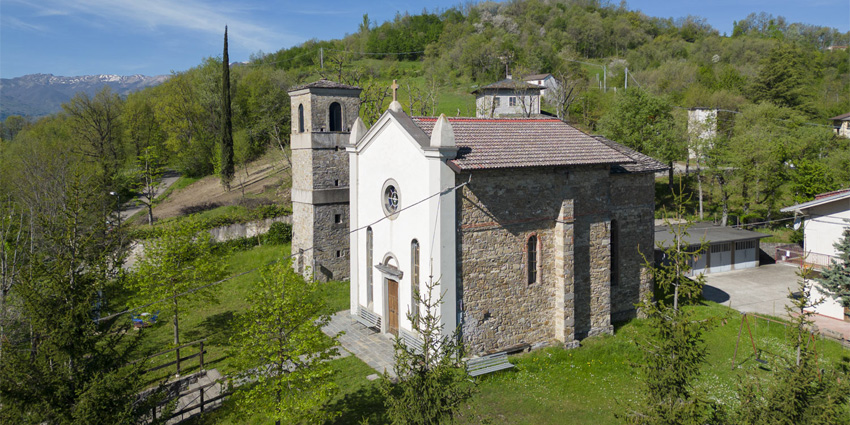
Oratorio della Rocchetta: A Hidden Sanctuary of Silence and Emotion
In the historic heart of Prato, where centuries-old walls echo with stories and the rhythm of daily life blends with cultural heritage, there exists a place that reveals itself only to those willing to slow down: the Oratorio della Rocchetta.
It is not simply an architectural site, but a deeply evocative space—one that invites reflection, introspection, and a quiet emotional connection.
Approaching the Oratorio, there is a subtle shift in perception. The transition from the outside world to the interior is almost imperceptible, yet profound. The light softens, filtering gently across the space, transforming surfaces into living canvases. Shadows and illumination interact delicately, creating an atmosphere that feels both intimate and timeless.
Inside, the experience unfolds gradually. The Oratorio does not overwhelm with grandeur or scale; instead, it speaks in whispers. Its beauty lies in restraint, in the quiet harmony between structure and meaning. Every wall, every detail carries a sense of purpose, shaped by devotion and time. The textures themselves seem to hold memory—fragments of gestures, prayers, and moments that have accumulated over generations.
The stillness within the Oratorio della Rocchetta is not empty; it is full, dense with presence. It encourages a different kind of attention—one that moves beyond observation into feeling. Visitors often find themselves slowing their pace, attuning to the subtle nuances of the space: the interplay of light, the quiet resonance of history, the almost tangible sense of continuity between past and present.
In a region like Toscana, renowned worldwide for its monumental art, grand cathedrals, and iconic landscapes, the Oratorio offers a contrasting experience. It is not defined by spectacle, but by intimacy. This makes it all the more powerful. Here, the absence of excess allows for a deeper, more personal engagement—one that feels authentic and unmediated.
Time behaves differently within these walls. Minutes seem to stretch, allowing space for contemplation. There is no urgency, no pressure to move quickly. Instead, the Oratorio invites a gentle lingering, an openness to whatever thoughts or emotions may arise. It becomes less a place to visit and more a space to inhabit, even if only briefly.
What makes the Oratorio della Rocchetta truly remarkable is its ability to resonate on a personal level. Each visitor brings their own perspective, their own emotional landscape, and the Oratorio responds in kind—quietly, without imposing interpretation. It is a place where meaning is not dictated but discovered.
Beyond its historical and artistic significance, the Oratorio stands as a reminder of the enduring human need for reflection and stillness. In an age defined by speed and constant stimulation, such spaces become increasingly rare and valuable. They offer not answers, but the possibility of pause—an opportunity to reconnect with something deeper, more essential.
Leaving the Oratorio, one carries more than just a memory of a place. There is a lingering sensation, a subtle shift in awareness, as if the silence experienced within continues to echo beyond its walls. It is this quiet transformation that defines the experience: not dramatic, not immediate, but lasting.
The Oratorio della Rocchetta remains a hidden sanctuary within Prato—a space where history, spirituality, and emotion converge in perfect balance, offering a rare and deeply human encounter with stillness.