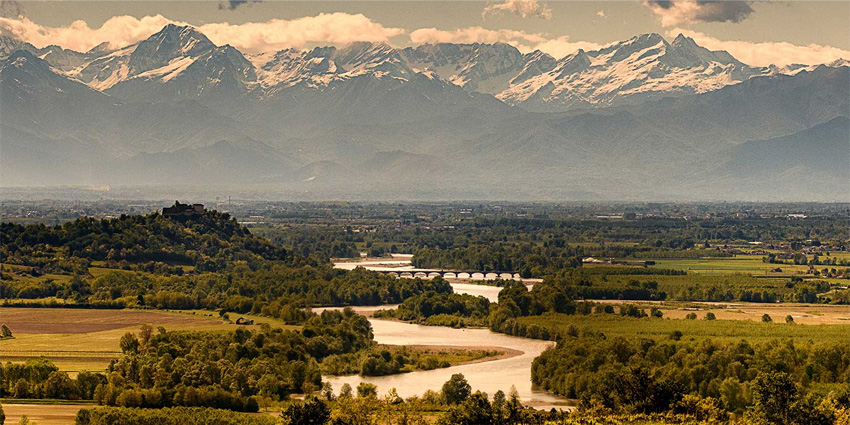
Oriented Nature Reserve of the Baragge: a primal landscape in the heart of Piedmont
The Oriented Nature Reserve of the Baragge is a place that defies expectations. Located between the provinces of Biella, Vercelli, and Novara,
this protected area reveals a raw and ancient landscape, far removed from the cultivated imagery often associated with northern Italy. The Baragge do not seek admiration through spectacle; instead, they offer a deep, quiet presence that unfolds slowly, leaving a lasting emotional imprint.
This territory represents one of the most distinctive natural environments in Piedmont, a rare fragment of land where nature has retained its original voice.
A land shaped by resistance and time
The word baraggia refers to a harsh, compact soil formed by glacial and fluvial deposits. Sandy, acidic, and difficult to cultivate, this land has resisted human transformation for centuries. Ironically, it is precisely this resistance that has preserved the identity of the Baragge, allowing a unique ecosystem to survive almost intact.
The landscape appears open and expansive, marked by vast plains, sparse woodlands, and watercourses that cut through the ground like ancient scars. There is a sense of spatial freedom here, where the horizon stretches uninterrupted and the land seems to breathe.
The Baragge Nature Reserve offers a vision of nature that feels untouched, almost ancestral, evoking a time when large portions of the Po Valley were still wild and unsettled.
The dominance of sky, wind, and silence
One of the most striking features of the Oriented Nature Reserve of the Baragge is the sky. Wide and ever-changing, it becomes the main character of the landscape. Light shifts constantly, reflecting on wetlands and dry grasslands, creating subtle contrasts that transform the scenery throughout the day.
The wind moves freely across the plains, shaping vegetation and carrying natural scents—dry grass, damp soil, stagnant water. It is a persistent presence, almost a narrator, guiding the rhythm of the place. In this environment, silence is never empty; it is dense, layered, and alive, amplifying every sound and sensation.
This balance between openness and stillness creates a deeply immersive atmosphere, where perception becomes sharper and time seems to slow.
A rare mosaic of ecosystems
From an ecological perspective, the Oriented Nature Reserve of the Baragge is an intricate mosaic of habitats. Dry grasslands coexist with heathlands, wetlands, peat bogs, and fragments of lowland forests. Each ecosystem contributes to a fragile yet resilient balance that supports remarkable biodiversity.
Rivers and streams such as the Elvo and the Cervo play a fundamental role in shaping the land, carving channels and creating microhabitats essential for flora and fauna adapted to extreme conditions. Seasonal changes profoundly alter the reserve’s appearance: spring introduces delicate blooms and fresh greens, summer emphasizes the arid character of the soil, autumn softens the land with warm tones, and winter strips it down to its most essential form.
Flora and fauna adapted to extremes
Life in the Baragge has evolved through adaptation. Plant species are often low-growing, resilient, and capable of surviving in nutrient-poor soils. Heaths, grasses, and birch trees dominate the landscape, forming open environments that feel both austere and poetic.
Animal life mirrors this adaptability. Birds find refuge in the wetlands, while mammals move quietly through the grasslands and wooded areas. Insects thrive in the varied microhabitats, playing a crucial role in maintaining ecological balance. The reserve functions as a sanctuary, preserving species that have disappeared elsewhere due to intensive land use.
A landscape marked by memory
Beyond its natural value, the Baragge hold a strong historical and cultural significance. For centuries, these lands were considered marginal, unsuitable for large-scale agriculture or urban development. This perceived limitation allowed the area to remain largely untouched, preserving a landscape structure that closely resembles its ancient form.
The human presence here has always been discreet, shaped by necessity rather than dominance. Traces of past use—paths, clearings, and subtle modifications—blend into the environment, reinforcing the sense of coexistence rather than control.
An intimate and lasting emotional experience
The emotional impact of the Oriented Nature Reserve of the Baragge is quiet but persistent. It does not overwhelm; it settles gently, inviting reflection and inner stillness. The vastness of the plains, the repetition of natural sounds, and the simplicity of forms foster a deep sense of calm.
This is a place that encourages contemplation rather than consumption. The experience lingers, creating a subtle connection between the observer and the landscape, grounded in authenticity and restraint.
The Baragge today: a protected heritage
Today, the Oriented Nature Reserve of the Baragge stands as a vital environmental heritage for Piedmont and Italy as a whole. Its protection safeguards not only biodiversity but also a way of perceiving nature that is increasingly rare—slow, unfiltered, and profoundly real.
The Baragge Nature Reserve remains a space that does not demand attention but rewards awareness. A land that speaks softly, offering silence, memory, and a deep sense of continuity between past and present.