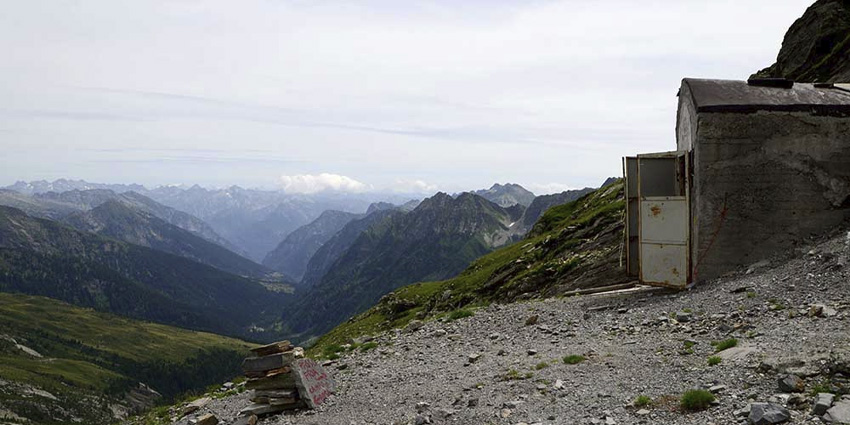
Passo della Fria Tunnel: an Emotional Passage Through Rock, Time, and the Dolomites
Hidden among the dramatic folds of the Belluno Dolomites, the Passo della Fria Tunnel is more than a mountain passage.
It is a moment of transition, a pause between landscapes, a silent dialogue between human ingenuity and the enduring presence of stone. Carved into the heart of the mountain, the tunnel does not merely connect two points on a map—it connects sensations, memories, and layers of history embedded in the rock itself.
Crossing the Passo della Fria means entering a space where the mountain speaks quietly, yet with authority.
The Passo della Fria: a Natural Corridor in the Dolomites
The Passo della Fria has long been a place of passage. Nestled within a rugged alpine environment, it lies where steep rock walls narrow the landscape, shaping a natural corridor that has guided movement for centuries. Shepherds, travelers, and later engineers have all encountered the same challenge here: how to pass through without disrupting the mountain’s balance.
The Passo della Fria Tunnel was born from this necessity. Rather than dominating the terrain, it follows its logic, adapting to the mountain’s structure. Approaching the tunnel, the environment grows quieter. Forests thin out, rock faces rise sharply, and the air feels cooler, heavier—charged with altitude and stone.
The entrance appears suddenly, almost discreetly, as if the mountain is reluctantly opening a door.
Entering the Tunnel: A Shift in Perception
Stepping into the Passo della Fria Tunnel is an immediate sensory experience. Light softens, sounds change, and the vast openness of the Dolomites compresses into a narrow, intimate space. The walls reveal raw rock, marked by mineral veins and subtle textures shaped by time and excavation.
Inside, echoes linger. Every sound—footsteps, engines, breath—returns altered, slower, deeper. The tunnel absorbs and reflects, reminding the visitor that they are moving through something ancient, something alive. Moisture clings to the stone, carrying the unmistakable scent of the mountain’s interior.
Time seems to behave differently here. The crossing is brief, yet it leaves a lasting impression, as if the mountain has quietly registered your presence.
Alpine Engineering and Respect for the Landscape
The Galleria Passo della Fria stands as an example of alpine engineering shaped by necessity and restraint. Building in this environment required precision, patience, and an understanding of the mountain’s temperament. The rock here is dense, resistant, unforgiving—yet it has been opened with care rather than force.
This tunnel belongs to a broader tradition of Dolomite mountain roads, where infrastructure exists not to conquer nature, but to negotiate with it. The mountain remains dominant. The tunnel does not attempt to hide that fact; instead, it reveals it through exposed stone and minimal intervention.
In this way, the Passo della Fria Tunnel becomes a lesson in balance—between movement and stillness, progress and preservation.
The Contrast of Light: Before and After the Tunnel
One of the most powerful aspects of the Passo della Fria Tunnel experience is the contrast it creates. Before entering, the landscape feels vast and vertical: sharp peaks, open sky, and steep slopes define the view. The Dolomites assert their presence with clarity and strength.
Inside the tunnel, that vastness collapses into shadow and stone. Vision narrows. Attention shifts inward.
Then, suddenly, light returns. Exiting the tunnel feels almost ceremonial, as daylight floods back in and the landscape opens once more. Colors seem sharper, air feels lighter, and the surrounding mountains appear renewed. This transition—from openness to enclosure and back again—gives the tunnel a symbolic quality, like a brief journey through the mountain’s memory.
A Silent Witness to History
The Passo della Fria Tunnel does not announce its history, yet it carries it within its walls. It has witnessed changing seasons, evolving vehicles, and countless anonymous crossings. Each passage adds an invisible layer to its story.
In the Dolomites, where World War history, traditional mountain life, and modern travel coexist, such structures quietly anchor the present to the past. The tunnel does not display monuments or inscriptions. Its testimony lies in endurance—in continuing to serve its purpose without demanding attention.
This silence is part of its power.
The Emotional Dimension of a Mountain Passage
What makes the Galleria Passo della Fria memorable is not only its function, but the emotional response it evokes. There is a sense of humility in passing through solid rock, an awareness of human scale against geological time. The mountain does not rush; it allows passage on its own terms.
For many, the tunnel becomes a moment of reflection. The brief darkness encourages pause, while the return to light suggests continuity and movement forward. It is an experience that resonates long after the crossing is complete.
An Integral Part of Local Identity
Beyond its practical role, the Passo della Fria Tunnel is woven into the identity of the surrounding territory. It is known, respected, and recognized by those who live and travel in this area of the Dolomites. Its presence feels inevitable, as though it has always belonged to the mountain.
Here, infrastructure does not overpower landscape. Instead, it becomes part of it—quiet, functional, and deeply rooted in place.
Passo della Fria Tunnel: Where the Mountain Speaks
In the end, the Passo della Fria Tunnel is not merely a route through rock. It is a space where the mountain’s voice becomes more intimate, where stone, shadow, and sound converge. Passing through it means briefly stepping outside ordinary perception and entering a dialogue with the Dolomites themselves.
When daylight returns and the road continues, something remains behind—a subtle awareness that the mountain has been crossed, not conquered, and that its presence endures long after the tunnel disappears from view.